Before moving on to the analysis, I would like to draw your attention to two points:
- If there are two particularly important episodes in a TV series, the first of them is the pilot — the 1st episode.
- Watching the pilot episode is enough to form an opinion about a series. (Under international practice, a series is analyzed and evaluated specifically on the basis of its pilot episode. The pilot also plays a central role when a series is being sold.)
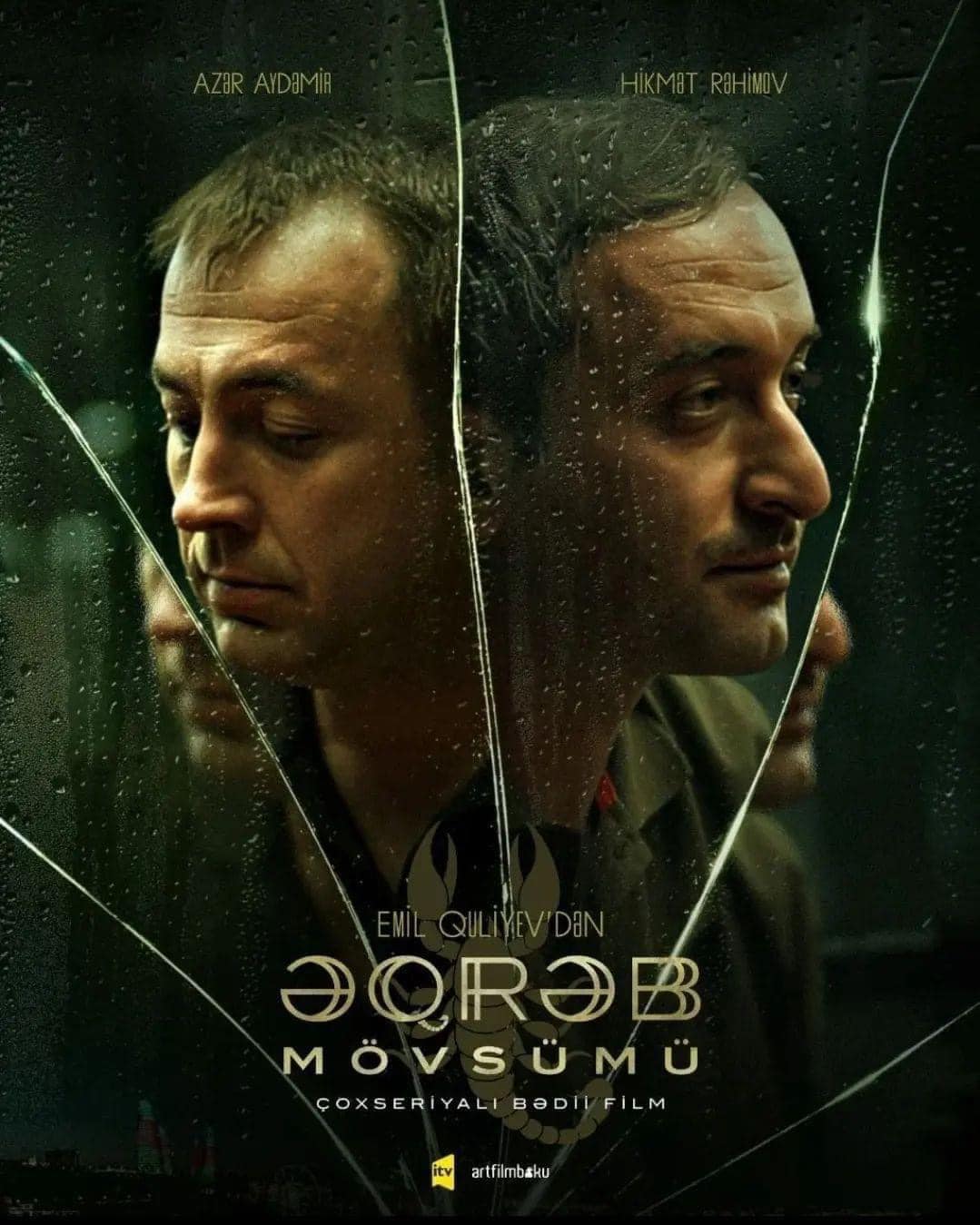
INTRO. The intro looked like a synthesis of the opening imagery from Hitchcock’s North by Northwest and the intro of the series Dark. The frames in the intro symbolized prison bars.
OPENING SCENE. The first scene is a fragment from the middle of the series. In this kind of opening scene, we are almost always shown the moment when the protagonist has lost everything or the dramatic situation they have fallen into. Here, however, the protagonist is simply shown at work. The scene is designed more to establish the atmosphere of the series and, to some extent, to hold the audience’s interest by making them want to understand what is happening.
PROTAGONIST. The protagonist’s (Rauf) indifferent and insensitive attitude toward dead people, seeing them merely as objects connected to his work, is his moral flaw. This flaw provides the foundation for the character’s transformation. Over the course of the series, the protagonist will undergo a metamorphosis and eventually change, coming to see the murdered people as human beings and becoming someone who feels for them and grieves for them. (This is the protagonist’s need — what he needs in order to change.)
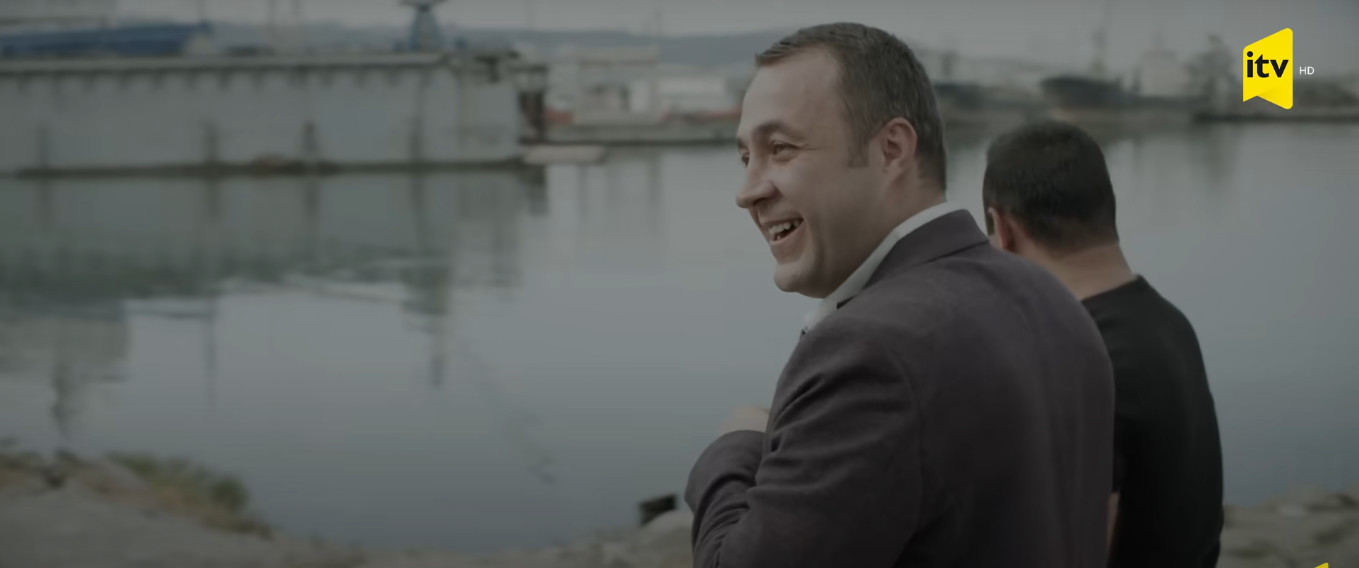
Alongside the protagonist’s flaw, the fact that he has someone he loves (Rəna) and cares for his mother creates an interesting contradiction within him. Presenting the protagonist with opposing traits in two scenes prevents him from being one-dimensional and turns him into a real character — a protagonist.
Showing the protagonist caring for his elderly, sick mother is a technique that makes the audience like him and creates sympathy for him.
Although the episode provides several important pieces of information about the protagonist, he does not receive enough attention. On the one hand, the writers give him a flaw and show how he is expected to change; on the other, they move him out of focus. In the final third of the episode, the protagonist is absent altogether.
Just as the protagonist is the most important character in a story, the investigator is the most important character in the detective genre. But the investigator in the series had no quality that distinguished him from an ordinary viewer. We are not shown how professional he is, or what advantage — the protagonist’s strength — will allow him to solve crimes. Nor are we shown what within him will prevent him from reaching his goal — his psychological flaw.
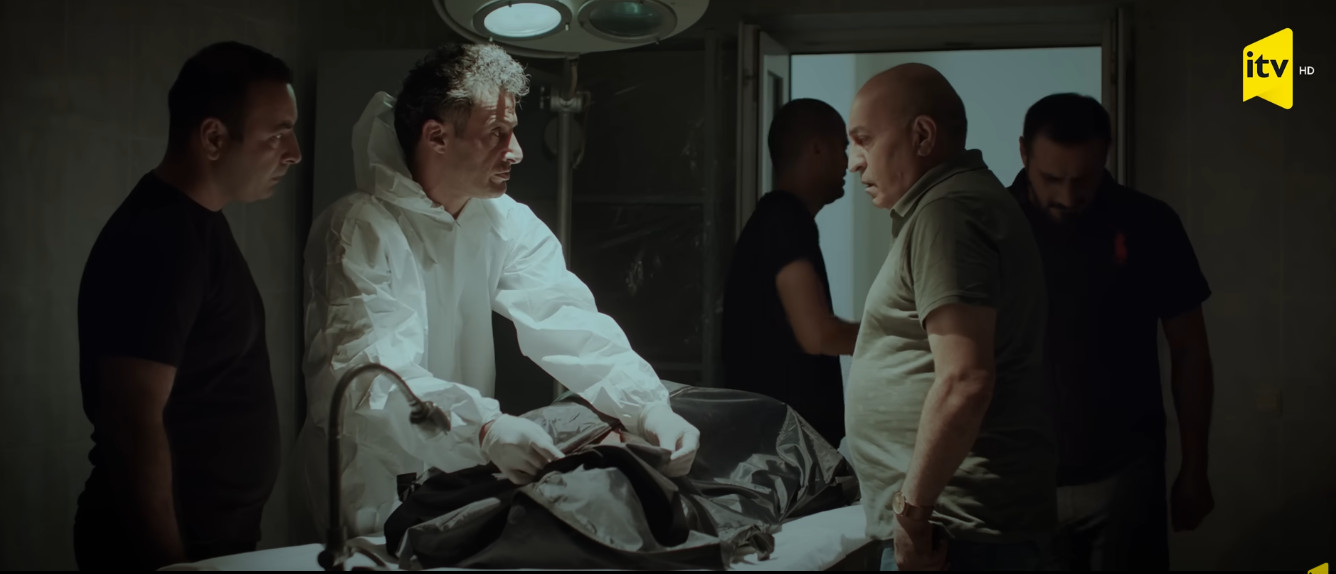
THE WORLD OF THE FILM AND PLAUSIBILITY. When a body is found on the seashore, we see that the police are already at the scene and the area has been cordoned off. Then the investigator arrives, and only that evening do the results of the medical examination become known...
In the police-station scene, the police major tells Qurban and his family, “I have sent all the information about Nurlan to headquarters as well. They will send it to all the districts.” This means that the city consists of different districts, each with its own police department and investigator... All of this shows us the world created by the writer and its rules. (The rules created by the writer do not have to match real life. The analysis is based only on that world and its rules.)
On the evening of the same day Qurban and his family come to the police, they are called back to the station and told that a young man’s body has been found. It later becomes clear that it is Nurlan’s body. The major says, “The body was found divided into 6 parts in different places around the city.” Different districts, police officers, investigators... The procedures at the places where each body part was found — police, experts, investigator, journalist, people, and so on. Plus the result of a DNA test confirming that 6 body parts found in different locations belong to one person — all of this in just 1 day...
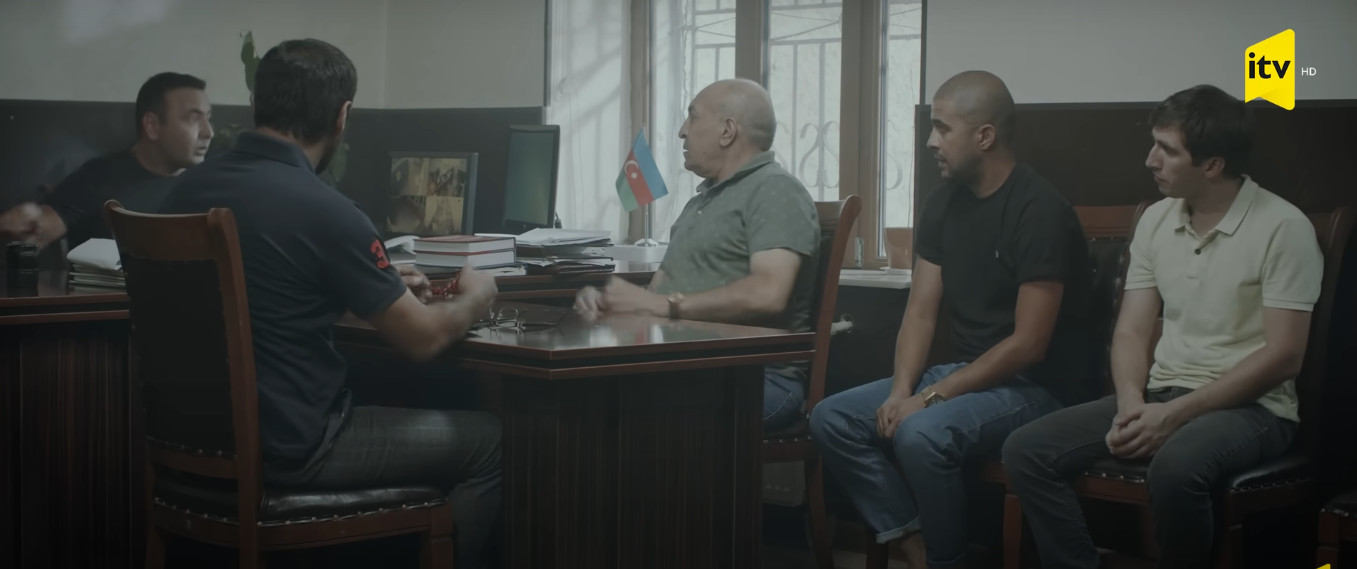
In order to provide information about the murder in the first episode, the writers break the rules they themselves established. (It is also possible that these rules were broken because of financial limitations. With an insufficient budget, they may have had to settle for conveying the event through dialogue. But a rule is a rule. A writer cannot break a rule they have established and that already exists in the film without justification.) Of course, information about Nurlan’s murder had to be given in one form or another in the first episode, because this is the event that sets the story in motion. But plausibility had to be taken into account when presenting it.
If screenplay rules established in a film are broken without justification, the story loses plausibility. And if there is no plausibility, the audience has no reason to keep watching.
STRUCTURE. In the final third of the episode, the protagonist (Rauf) does not appear. The writer shifts the focus from Rauf to Qurban’s family. As a result, the episode has no leading line. For this reason, no clear structure is visible.
DEVELOPMENT OF CONFLICT. The reason for the absence of structure also applies to the development of conflict. Since there is no leading line in the episode, there is no development of conflict either. This is the main reason the episode feels boring.
The event that will create the main conflict happens only at the very end of the episode. In this way, the conflict that will emerge later is announced.
PLOT LINES. Although many plot lines are introduced in the first episode, there is no main line. Instead, we have Rauf–Rəna, Kərim–Günel, Namaz and his wife, Elnur–Lalə, Vaqif–Elnarə, and two crime lines.
Was Bahar touching Qurban’s hand meant to hint at a Qurban–Bahar line? It was not clear.
The plot lines in the series consist only of exposition, with no development. Having this many lines in one episode scatters the audience’s attention, while the lack of development in those lines makes the first episode boring.
Rauf’s relationship with Rəna is another line connected to the protagonist — a secondary plot line. Rauf’s elderly and sick mother is the antagonist in this line. (Perhaps she is even the main antagonist, although other antagonists may also exist.) Many of the protagonist’s character traits, as well as his struggle with his moral flaw — obtaining what he needs — will most likely be presented through this line. But this plot line also had no development.
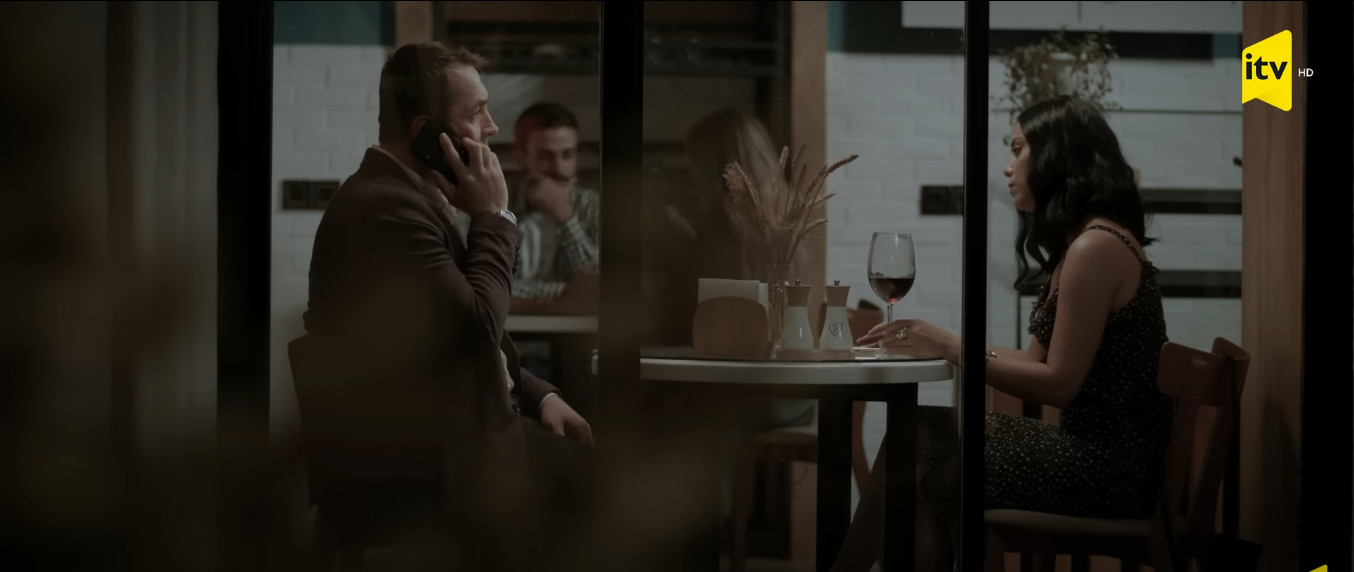
DRAMATIC QUESTION. Apart from the psychological question, the series establishes the season’s questions. Can Rauf, the investigator, find the killer? (Physical question.) Can Rauf build a relationship with Rəna? (Emotional question.)
THEME. The plot lines suggest that the theme will concern male-female relationships. It may be love, trust, respect, or something else. The theme is not presented clearly.
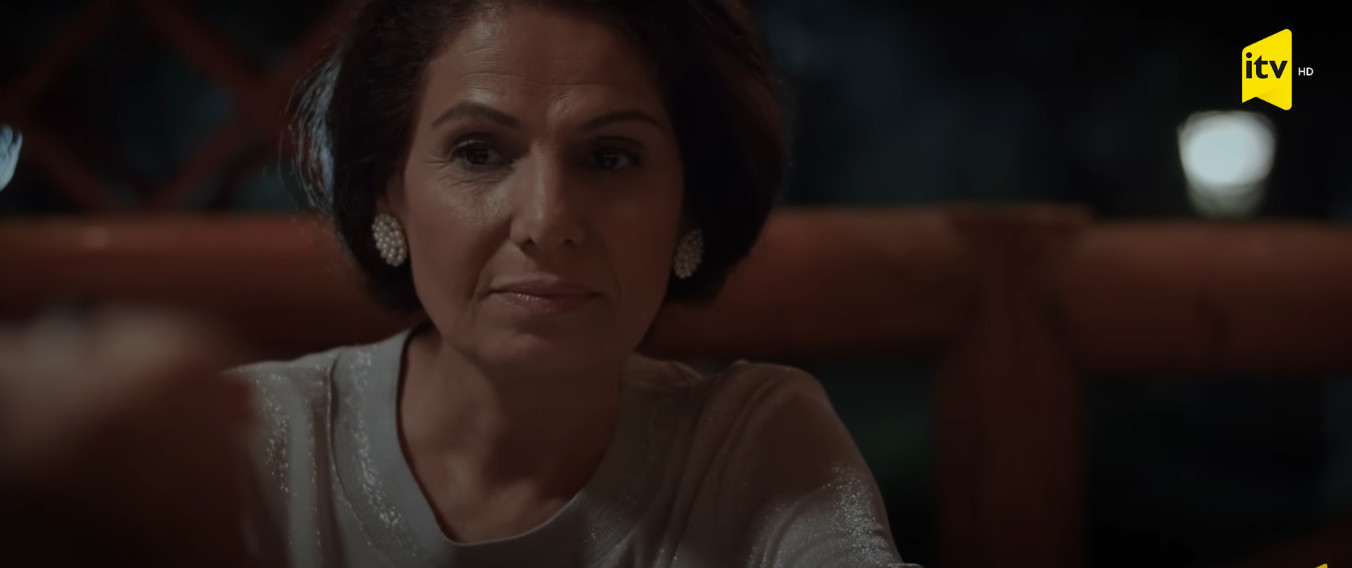
THEME 2. The series most likely develops another theme as well. During a conversation in a restaurant, one of the characters suddenly starts talking about the arrogance of a boy named Seyran. Then they discuss the simplicity of Qurban’s son. The conversation continues with how children behave at home and in society. In the home scene, Nurlan asks his parent for permission, while Kamran says whatever comes to mind in front of the parent. The theme is probably connected to children’s behavior or upbringing. Or perhaps to parent-child relationships. This theme is also not presented clearly.
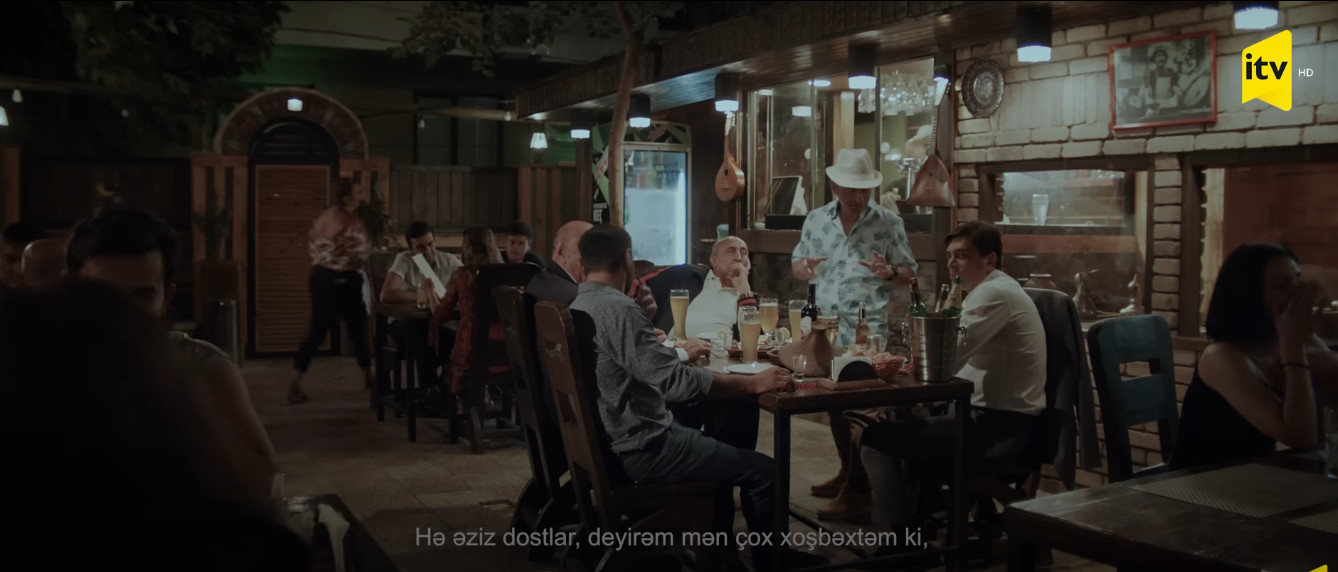
SCENE. There were too many conversation scenes in the episode, and all of them carried the burden of delivering information. In some scenes, long stretches of dialogue that were not necessary were used simply to deliver one important piece of information.
Many scenes lacked conflict and tension and functioned only as exposition. Exposition is, of course, indispensable because the audience needs it to understand the story. But when exposition appears in scenes without dramatic tension, those scenes become boring, which means the audience’s attention drifts. At the same time, the lack of artistic solutions in the scenes was also noticeable.
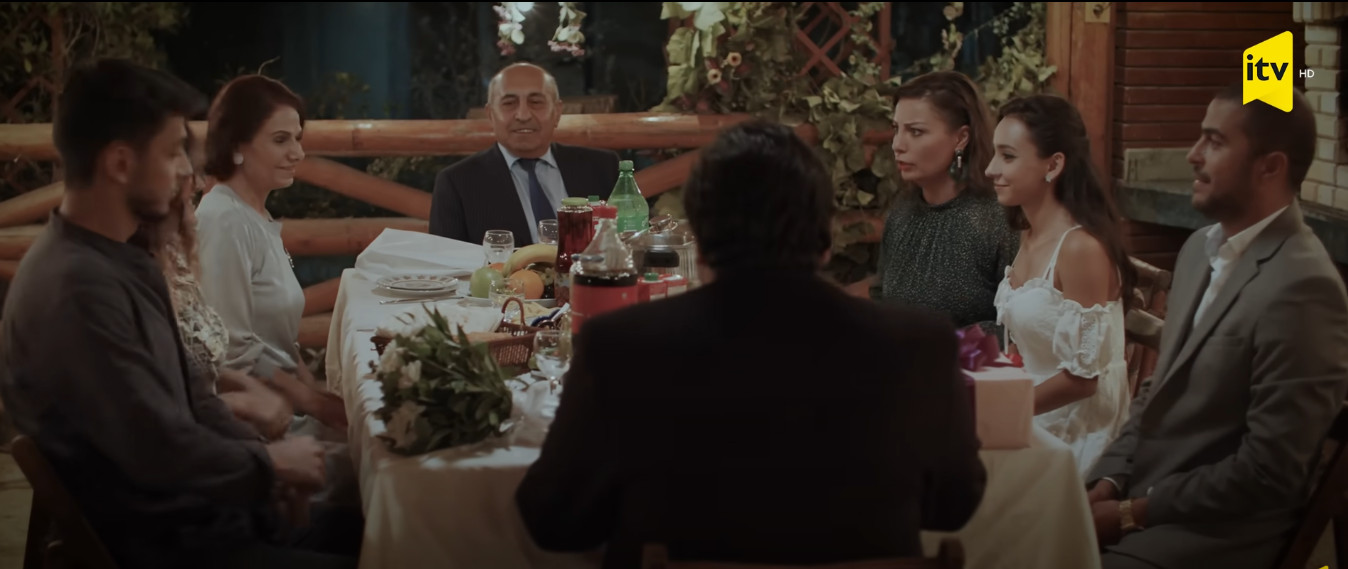
The scene introducing Vaqif and Elnarə — there is a wedding in the yard while Vaqif is angry inside the house — does not serve the series.
DIALOGUE. The dialogue in the series was written in an everyday conversational style. Like the way we speak in real life, it contained many filler words that carried little meaning and were not relevant to the matter at hand. Although film dialogue resembles our real-life conversations, it is not actually the same thing. We know that dialogue is a specially constructed set of information that needs to be conveyed to the audience. Dialogue has functions, and in the episode the dialogue fulfilled those functions only to a certain extent, while those functions became lost among the filler words.
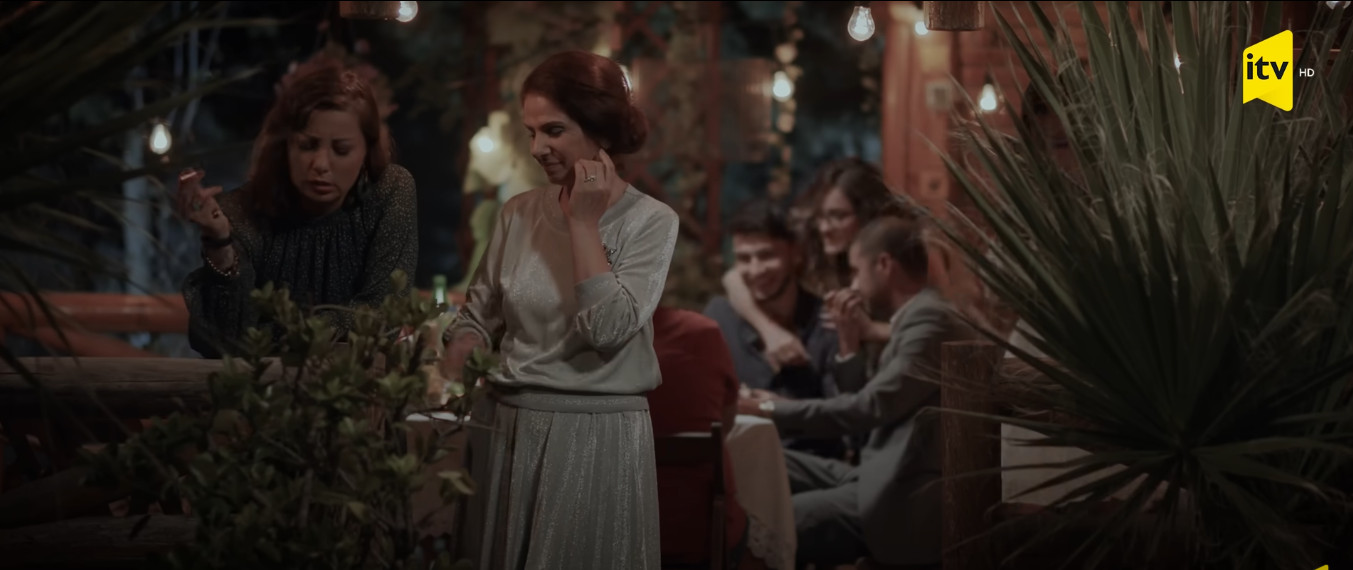
This approach to dialogue was probably chosen so the series would be accepted by a large part of the population. Dialogue like this is not considered professional work. But because much of our audience regards this kind of dialogue as natural — including the use of Russian words — the writers seem to have considered appealing to the majority of viewers more important.
FUTURE ELEMENTS. While talking to Qurban about how spacious their house is, Namaz twice uses the expression “one of these days you’ll have both joy and sorrow here.” This is an announcement of the future and is designed to hold the audience’s attention. The audience already knows that the series is in the detective genre and that murders lie ahead. This dialogue announces that someone in Qurban’s family will die. The audience is compelled to keep watching in order to find out who it will be. This information will later serve the story again. In subsequent episodes, the dialogue will function as a clue that causes Namaz to be suspected in Nurlan’s death.
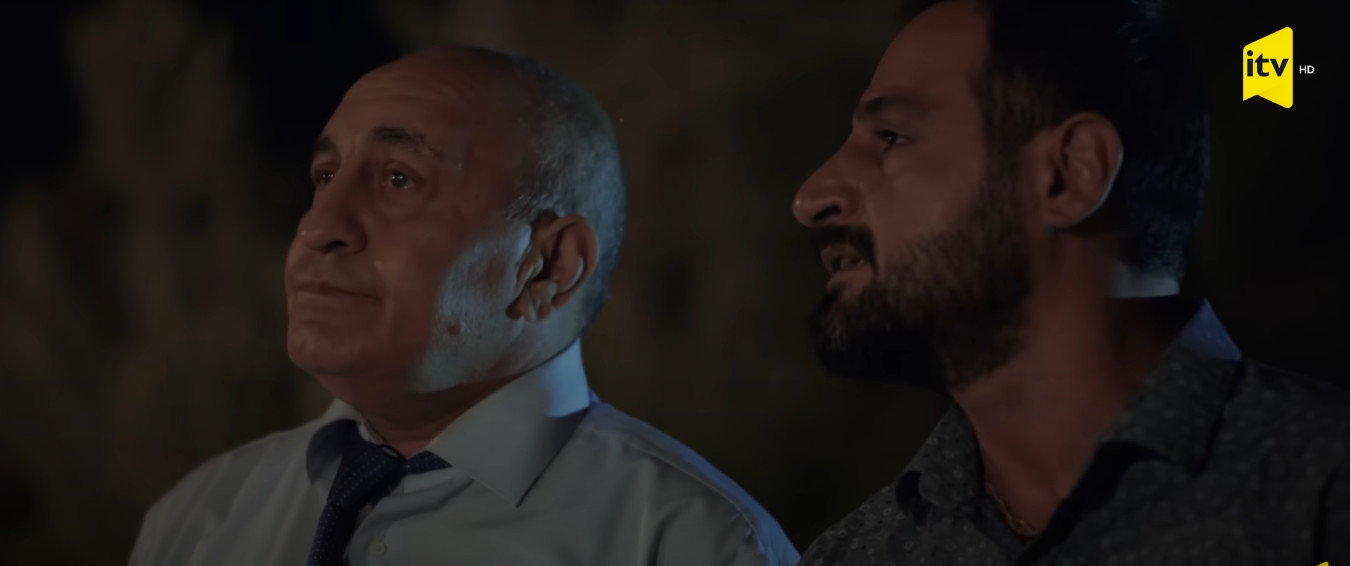
In general, the episode contains many announcements of future events. Kamran’s WhatsApp messages, Elnur talking to Kərim in the office about “that matter,” the question of why Vaqif is angry with his wife, people saying behind Qurban’s back that he has “dirty” dealings, and so on. All of these elements are intended to hold the audience’s attention, create anticipation, and push viewers to watch the next episode in order to get answers.
CONCLUSION. In horizontally structured TV series, the first episode serves as the “set up” for the series. “Set up” means presenting the world of the film, its rules, the characters, their relationships, situations, theme, and the other things needed for the story to begin. But at the same time, the story itself must already start in the first episode. In other words, the first episode both performs a “set up” function for the series and exists as an episode in its own right.
In “Əqrəb mövsümü,” the first episode also performs the “set-up” function for the series. But the episode itself does not exist independently. The writers invested everything in the following episodes and, in the first episode, tried more to create the impression that the next episodes would be more interesting than to actually start the story.
The large number of plot lines and characters, the announcements of future events, the seeds of tension and conflict between characters, and even the information about the murder delivered at the cost of breaking established rules — all of this is designed to create the impression that the following episodes will be more interesting. I have not watched the next episodes. Perhaps they really are interesting. But you cannot sacrifice the most important episode of a series in order to make the later episodes interesting...
In any case, it is good to see that the series has created so much discussion. We should remember that the work, the series and its creators — all of them are ours. A work in which everything belongs to us should be accepted with all of its shortcomings.
The fact that the TV channel allocates funding to the series deserves praise. God willing, over time the quality will also rise to the desired level. The important thing is that we do not stop supporting it. And, of course, that the budget increases as well.
My thanks and best wishes to the creators of the series and to the İtv channel! May it continue!